Thursday, 1 January 2015

The Somerset Levels, past, present and future

As I say in my New Age Encyclopaedia, Glastonbury in the Somerset Levels has been a spiritual centre for thousands of years. It is said that the first Christian settlement in Britain was established there by Joseph of Arimathea, and in the town today is an impressive ruined abbey. The town is presided over by the ‘tor’, a striking cone-shaped hill. On the top of the tor is a ruined church built over a prehistoric stone circle. A few miles away is Burrow Mump, a similar but less well-known hill, and that was where we went on Tuesday.
 
Burrow Mump has a ruined church on the top, like Glastonbury Tor. I wonder if there was once a stone circle here too.
Both Glastonbury Tor and Burrow Mump are encircled with small ridges. It is said that these are the remains of paths taken by prehistoric people in their rituals but I think they’re more likely to be the result of soil slippage as the slopes are very steep. Nevertheless, in order to prolong our fun, these were the paths that Ellie and I took. Frog joined us at the beginning and then got bored and climbed straight up the slope to the top.

Getting closer. The slope is much steeper than it looks in the picture but you can clearly see the ridges
We’d spent a lovely day shopping and eating in Glastonbury – it really is one of my favourite places, with friendly people and a special atmosphere – so the sun was setting as we pursued our walk.

We were fascinated by the vapour trails. (Ellie, left.)


Tree skeletons and setting sun around the other side of the mump
The Somerset Levels, as you probably know, are below sea level and were marshland until the Middle Ages, so Burrow Mump and Glastonbury Tor were islands. The views from the top of both are 360-degree.

From the top of Burrow Mump this Tuesday, with the trees lit apricot by the low sun. (Ellie, right)

Last winter the Levels did their best to revert to their former state, and here is the same view in January.

More or less the same view last January, with the Levels resembling an inland sea.
Will last winter's weather repeat itself? Will the flood precautions do their job? Or is the area a candidate for rewilding (see previous post) or at least an extension of the current wildlife reserves? Already bitterns have returned to these reedy patches, cranes which (according to George Monbiot) were once as common as seagulls (hence place names with 'cran' in them) have been reintroduced, and the area is famous for its flocks of starlings. More, I say (although I probably shouldn't).

NB The first two pictures were taken with my new camera (which then ran out of memory because I didn't yet have a card installed) and the rest with my old one. As you can see, the colours of the new camera are much brighter than those of the old. I hope I'm going to like them.

Sunday, 28 December 2014

Rewilding


Frog is not a keen walker but yesterday he agreed to come out with me. We drove to a nearby village and took a route I thought I hadn’t done before but realised that I had – once, in the other direction, with a group of friends, a few years ago. Although only a little further from Exeter than where we live, the land felt wilder and emptier. The fields were steep, the pasture unimproved. We didn’t meet another soul. We heard nothing but wind and birds. And we had a little adventure when I lost the path in a spooky wood. Perfect!

On the edge of the spooky wood. (Spot the dog.) I think I need a camera with a spirit level.

Rustic fence and oak trees.

Tree skeletons


Just us and the view


I’m reading a fabulous book at the moment. I chose it because of the title: FERAL: Searching for enchantment on the frontiers of rewilding. Because I’m still only halfway through and because it’s not an easy book to summarise, I won’t tell you in my own words what it’s about but instead quote from the blurb:

Feral is the lyrical and gripping story of George Monbiot’s efforts to re-engage with nature and discover a new way of living. He shows how, by restoring and rewilding our damaged ecosystems on land and at sea, we can bring wonder back into our lives.


As I’ve mentioned, I’ve been busy recently with a new job – editing our local magazine – and have not had time for my own creative writing. Having had a break from the editing over Christmas however, I realise how important creative writing is to me – whether or not what I write is published. It’s an expression of my own wild self. And this blog is a good place to restart – whether or not anyone reads it!

Off today to buy a new camera. Expect lots of amazing pictures.

Sunday, 14 December 2014

Saturday


I climb the hill with the dog.
The sky is spotless blue.
Three lines arrive in my head:

I don’t like myself at the moment
but I don’t know how to be different.
I don’t know what different to be.

I stop in a gateway to write them down
and some skylarks flutter by,
glinting like fishes.

Later, in a secluded field,
I see tree skeletons against the sky,
and I’m happy again.

Thursday, 4 December 2014

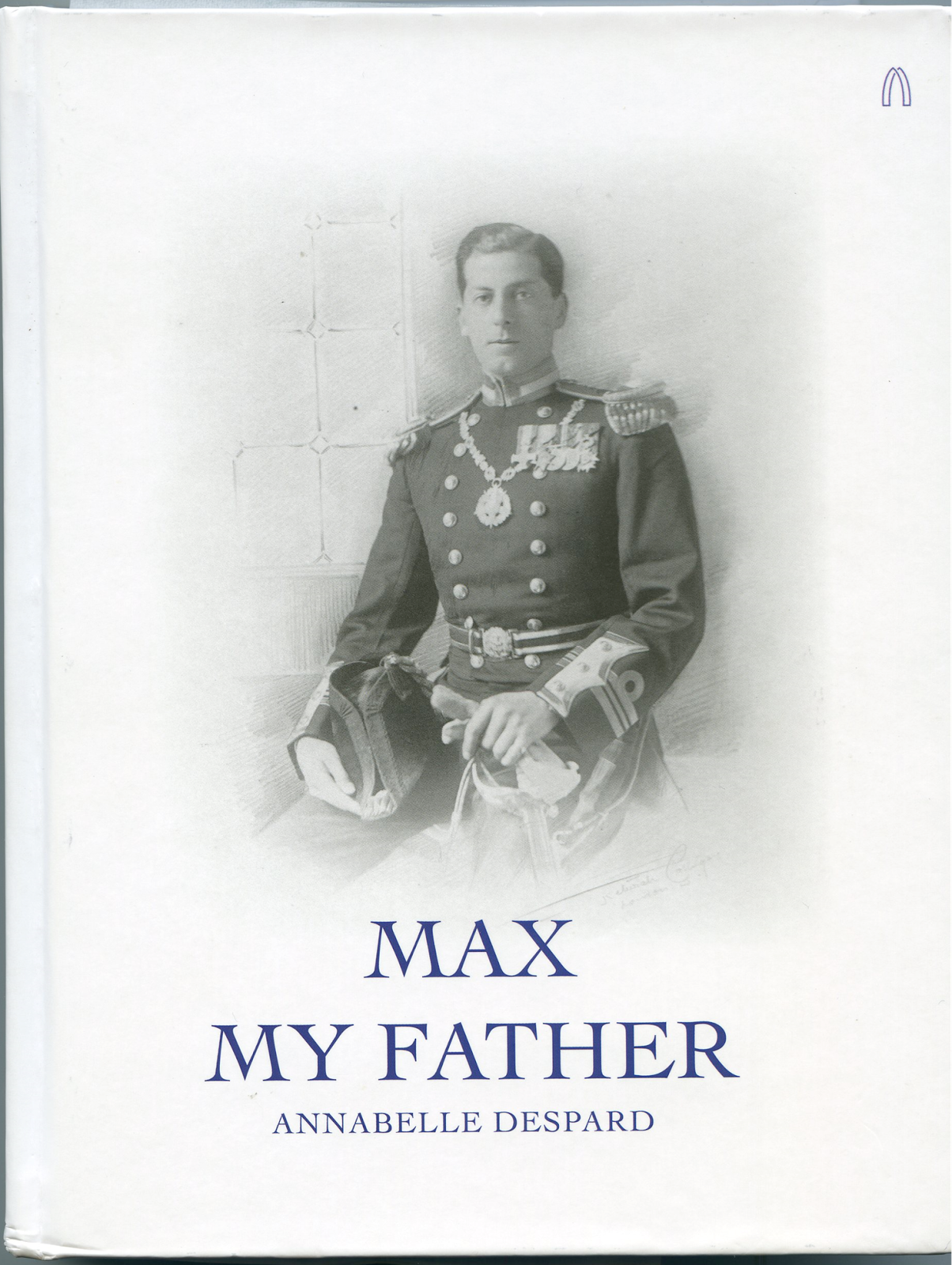
Part biography and part poignant memoir


The following is a copy of a review I've just posted on Amazon.

http://www.amazon.co.uk/Max----Father-Annabelle-Despard/dp/8283140264/ref=sr_1_1?s=books&ie=UTF8&qid=1417689029&sr=1-1&keywords=max+my+father
 

Max Despard was born in 1892 of Huguenot and Anglo-Irish ancestry. He served in the British navy in the First World War and was awarded the DSC ‘in recognition of exemplary gallantry’. His active career in the navy came to an end however in 1925 when a gun exploded next to him, tearing his hip and filling his thigh with shrapnel. Before and during the Second World War he served as naval attaché in Eastern Europe, directing clandestine operations on the Danube designed to stop supplies getting to Germany.
    Tall and flamboyant and signing his name ‘M’ on official documents, he may be some of the inspiration for James Bond’s boss, but after the war his life went into decline. In constant pain from his wound, he was not re-employed by the navy and retired on a pension that only took into account his active service. In 1949 his wife died of cancer and he and his children parted.
    Annabelle Despard was only six at the time and went to live first with relatives in Norway and then four years later with her much older, married sister back in England. She saw Max infrequently and the family never properly explained to her what had happened to her mother nor why she was separated from her father. This book is her attempt to discover more about this painful period – still a family no-go area – and about the father she hardly knew.
    I’m a daughter of the sister she went to live with. I met Max (my grandfather) once, when I was six. I welcome this book. And, because Annabelle is an accomplished writer (6 books of poetry, another memoir, and 4 books connected to her work teaching English at a Norwegian university), and because Max’s life was both extraordinary and of its time, and because every family has its secrets, others will too.

Sunday, 12 October 2014

Leaving space for imagination


No time to write much – frantically busy putting together my first issue of our parishes magazine – so here instead are some pictures from a walk this afternoon on the Grand Western Canal.

It wasn’t until the end of the walk when I stopped to wait for Frog that I started to notice things and got out my (broken) camera.

Imagination rushes in to fill up the spaces. You have to leave spaces to allow for imagination, but alas I have too few spaces in my life at the moment