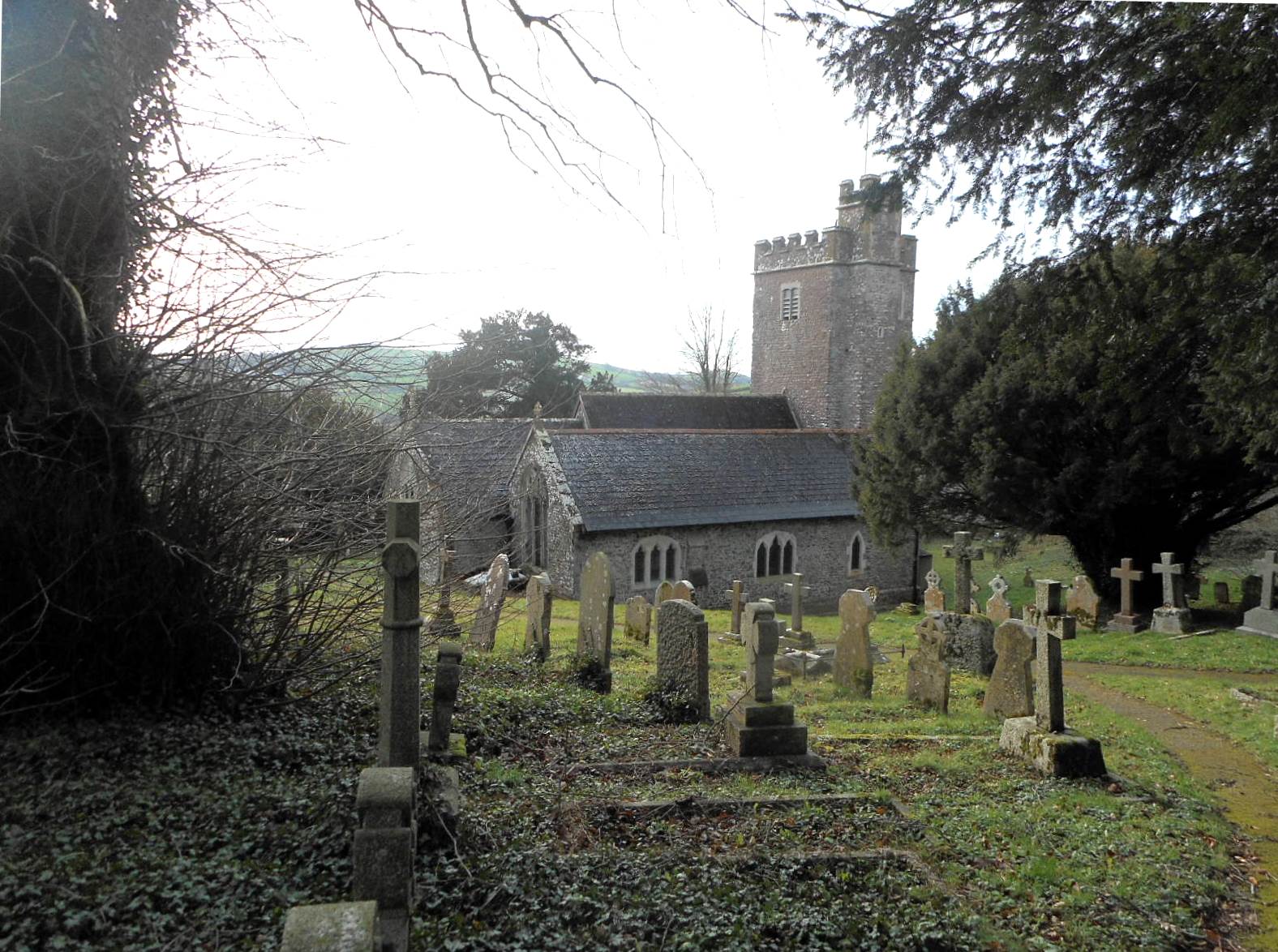
I’d done some research and discovered that ‘hill forts’ are Iron Age villages protected by ditches and banks, but I didn’t hold out much hope for this one as any I’d seen before were hidden in undergrowth and more imaginary than real.
Tuesday, 26 January 2021
A day of magic
I’d done some research and discovered that ‘hill forts’ are Iron Age villages protected by ditches and banks, but I didn’t hold out much hope for this one as any I’d seen before were hidden in undergrowth and more imaginary than real.
Tuesday, 19 January 2021
New moon, new broom
Tuesday, 12 January 2021
Nature washing over you
Oh dear, here’s one of those signs that make me see red. It’s children I worry about. Do they ever get the chance to be out in the countryside by themselves, to explore and play and use their imaginations?
| The unwelcoming sign |
| Lovely views |
And there’s plenty of woodland here accessible from the path.
| Accessible woodland |
Oh dear. Here’s a new fence.
| A new fence |
And what about this? I call this sort of footpath a ‘gulag’. (The bridge is for the animals.)
| The gulag |
| The watermeadows |
| Negotiating the mud |
Two days ago
It’s Sunday and lockdown and people stream round the lanes and paths which I’ve had to myself for four decades. I don’t know where they all come from but I suspect Exeter, whose new housing estates are spreading our way, and from a new town which has sprung up a few miles to the east of us.
Nevertheless I’m charmed by a clump of gorse in flower as ever, some bedraggled left-over red campion and some toadstools projecting horizontally from the hedgebank. What on earth are they? They look like felted drumsticks.
| Red campion |
| What are these toadstools? |
Now we have to cross the stream, well churned by cattle. Ellie charges through, splashing mud up our trousers. Frog treads warily. He’s wearing walking boots which reach only to his ankles. I’m wearing wellies so I wade over, trying each foot before putting my weight on it, remembering a time when I sank into quick-mud and had to abandon a wellie, throw myself forwards and crawl out (then walk home filthy and one-booted).
We wonder about the green pimples all over the grass.
‘Perhaps they’re fairy houses,’ I say whimsically.
‘Maybe,’ says Frog. ‘I did think I saw a door in one.’
I suddenly feel terribly excited. ‘Where?’
It turns out to be a leaf.
We have a choice of routes, but there’s not much in it. Each is as muddy as the other.
| The unmetalled road |
| The bridleway (right) |
We descend to a hamlet, so damp and deep that the lichen on the trimmed hedge looks like a forest of miniature Christmas trees.
My back’s beginning to ache so we rest at the gateway to a farm. Two muscular collies charge out barking, look us over, and then wander off, having decided that we’re OK. I feel honoured.
Monday, 28 December 2020
Geoffrey Grigson, Samuel Palmer, John Clare and me*
A long time ago in the days when I earned money as a writer and editor and did my research not on the internet but in libraries (among other places), I came across a fascinating book. It was called The Englishman’s Flora (rather unfortunately, but those were sexist days – even more so than now) and it listed all the country names for wildflowers as well as some of the folklore associated with them. It was a big beautiful hardback, available for reference only.
This summer, when I was inspired to write about my passion for wildflowers – because it was a beautiful summer, because walking in the countryside was mostly what I did and because Kate of the blog I live, I love, I craft, I am me took an interest in my blog and gave me confidence, I looked out for the book again and discovered that it now lived in the library’s ‘stack’ – that mysterious dusty cellar where old books went to die – and that it could actually be ordered and borrowed. So I borrowed it.
![]() |
| Original version |
It was, I found, first
published in 1955 and is not even listed on Amazon. A second-hand 1987 reprint
on the other hand is listed as ‘from £430’. And I had the original in my hands.
What’s more, because of the on/off Lockdown, I could keep it for as long as I
liked (unless someone else wanted it which didn’t seem very likely). Libraries
are wonderful places.
![]() |
| 1987 version |
I looked into the author too, which
was the poet Geoffrey Grigson, husband of the cookery writer Jane Grigson and
father of Sophie Grigson, cookery writer and occasional television cook. He’d
also written a book called Samuel Palmer: the Visionary Years. I
borrowed that too because I knew that Samuel Palmer, a painter, had lived for a
time in the village where I was brought up – Shoreham in Kent. It turned out
that those visionary years were his time in my village. I wasn’t surprised, but
at the same time none of his pictures conveyed the place to me. The colours were wrong for a start.
![]() |
| A painting of Shoreham by Samuel Palmer |
Then, a week ago, I borrowed a book of Geoffrey
Grigson’s called Poems of John Clare’s Madness, both because I’m
fascinated (and terrified) by madness and because of my interest in John Clare.
As I said in my recent post ‘May every cage be open’, John Clare is known for his nature poetry and for the madness caused by
separation from the countryside of his childhood. I could relate to that,
seeing as mine is now the M25, but I didn’t know how I knew that about him and
felt that I ought to find out for myself.
![]() |
| John Clare aged 27 |
Then, although I don’t normally
read poetry, I thought I might read some of John Clare’s, and I started with
the one whose title leapt out at me. I loved it and reproduce it here
for you. (As far as I know, it’s not in copyright but if you disagree do please
let me know.) Amazingly, it was written while he was in the mental asylum where
he spent 28 years.
Clare hated punctuation apparently and fought with his editors. I hated the punctuation in the printed poem and so have taken the ENORMOUS liberty of removing or changing nearly all of it. I've also taken out some of the capital letters, especially those at the beginning of lines, because to me they were unnecessary and misleading. (One day I ought to try and look at Clare's original manuscripts, if they exist.)
I Am
I am the self-consumer of my woes.
They rise and vanish in oblivious host
like shadows in love’s frenzied, stifled throes
and yet I am, and live like vapours tost.
into the living sea of waking dreams
where there is neither sense of life or joys
but the vast shipwreck of my life’s esteems,
even the dearest that I love the best
are strange – nay, rather stranger than the rest.
a place where woman never smiled or wept
there to abide with my creator, God
and sleep as I in childhood sweetly slept
untroubling and untroubled where I lie -
the grass below, above the vaulted sky.