I said in my
previous post that I wasn’t interested in history, but several things have
happened recently to make me review that position.
* * *
A few days ago I
was walking with Ellie in our local National Trust park. Because the weather
was hot and steamy and because I had a slight headache, I decided to stick to
the shade, even though that meant trekking up hill through woods dark and
silent at this time of year and on footpaths rather than going off piste as I
usually do.
At the top of the
hill, in the thick of the trees, I suddenly saw a doorway up ahead. Ellie barked. I stopped in amazement, almost alarmed. Had I stumbled on an entrance to Narnia? Had
aliens finally landed? Was I going doolally?
 |
| The doorway in the wood |
As I got nearer I noticed an information board and from it I learnt that this doorway represented the possible door to a lost Palladian mansion. Recent archaeology had uncovered for the first time the foundations of a building written about but never finished. I wandered over to a roped-off area and discovered a section of brick flooring.
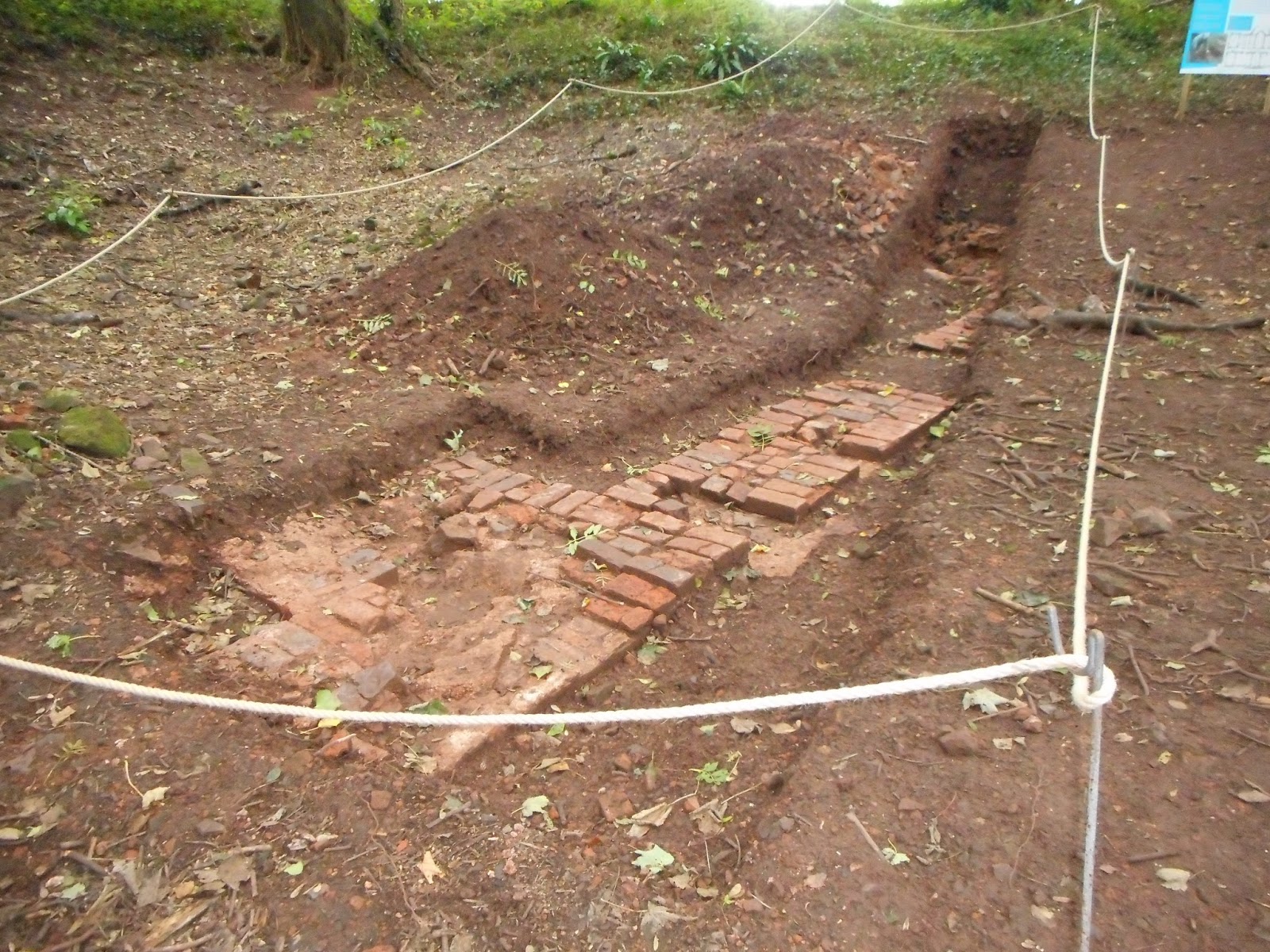 |
| Brick foundations, recently uncovered |
Perhaps because the
floor was so scruffy, and had remained hidden almost since it was built, and you
could walk right up to it, and there was no one else around, I had a sense
of connection with the men who had laid the bricks two hundred and fifty-odd
years before. I could see their workmanship. I could feel them still around.
* * *
This lovely oil painting (photographed by John Melville www.john-melville.co.uk) shows my father’s mother. It appeared one day on the wall of my mother's house after my father died and
has recently come to me (by kind permission of my siblings).
 |
| The oil painting of my father's mother that has recently come to me |
I took the painting to be
cleaned and reframed, and as the framer (Calmar of Exeter www.calmarframing.co.uk - recommended) took it out of its old frame he pointed out at the bottom of the painting an
artist’s signature and date, up until then hidden. There, in what I presumed was her
own handwriting, was the name Margaret Rowney, and the date 1932.
 |
| The artist's signature, recently uncovered |
Because as far as I
knew no one else in the family was aware of who had painted the picture and
because I had discovered this for myself, I felt excited. I felt a connection
with the artist.What’s more, I had a vague idea that my maternal grandmother’s
family was related to the Rowneys, makers of artists’ materials. Even more
importantly, I knew that my grandmother had died of pneumonia when my father
was quite young (six, I thought), and in 1932 he would have been eight. I'd obviously been wrong about my father's age when he lost his mother, but had
this painting been done shortly before her death, by a cousin?
I rang my Aunt
Jane, my father’s only surviving sibling, and she was thrilled with my
discovery. She confirmed the Rowney connection – she had photographs she
would send me, she said - and she told me my grandmother’s name, something I
had never known, even though that seems hard to believe: Joan Limebeer.
That name took me
back to the books I’d been sorting. I’d come across it written on the flyleaves of some leather-bound Rudyard
Kipling novels together with the date March 1st 1919. I'd kept the books because I mentioned them to my brother J and he said he'd found some too in the boxes of books he'd taken away.
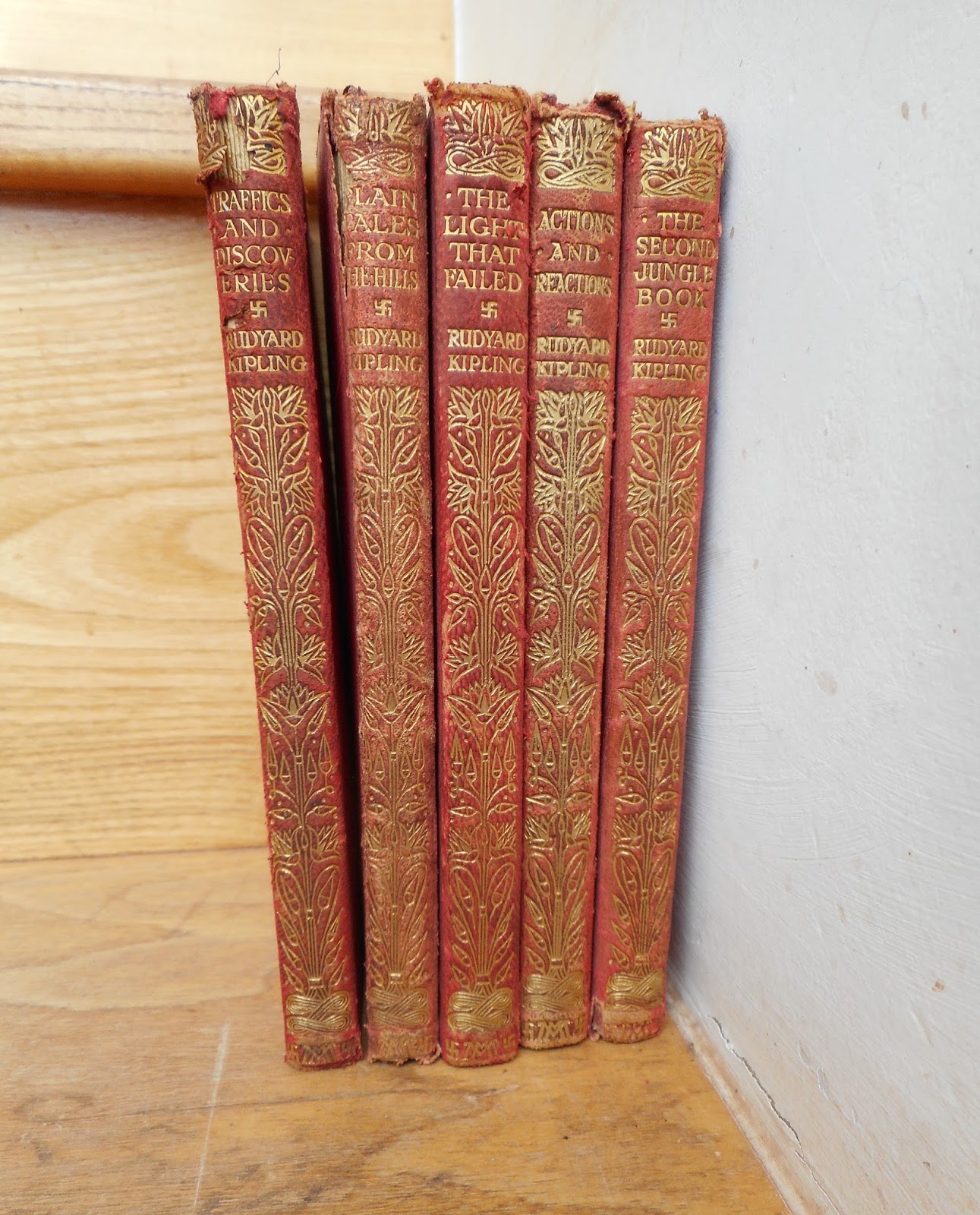 |
| The Rudyard Kipling books I found and the writing on the flyleaves |


Two different
handwritings appeared in the books. Was either of them my grandmother’s? If I
touched the script would I connect with a grandmother I never knew and who was
never talked about?
What was the significance of the date?
I'd seen a
photograph of my grandmother as a child and I'd always thought
she looked a bit like me as a child and here she was, a young woman,
reading books and perhaps writing her name inside them. She was real.
* * *
History does of
course come alive when you have a personal stake in it, but I wonder if
something else is going on here. To quote Juliet Nicholson again (in A House Full of Daughters – see previouspost):
And yet it is often when those people who
made us are no longer alive that we can reassess and be free of them and work
out for ourselves exactly who we were and who we are.
The fact that I’m
now an orphan (as my brother D put it), means that I can explore my family - and even wider - history
without fear of losing myself.
The opposite in fact.
* * *
Incidentally, does anyone know anything about the surname Limebeer? I've never heard it before and it doesn't appear it in my Penguin Dictionary of British Surnames.


